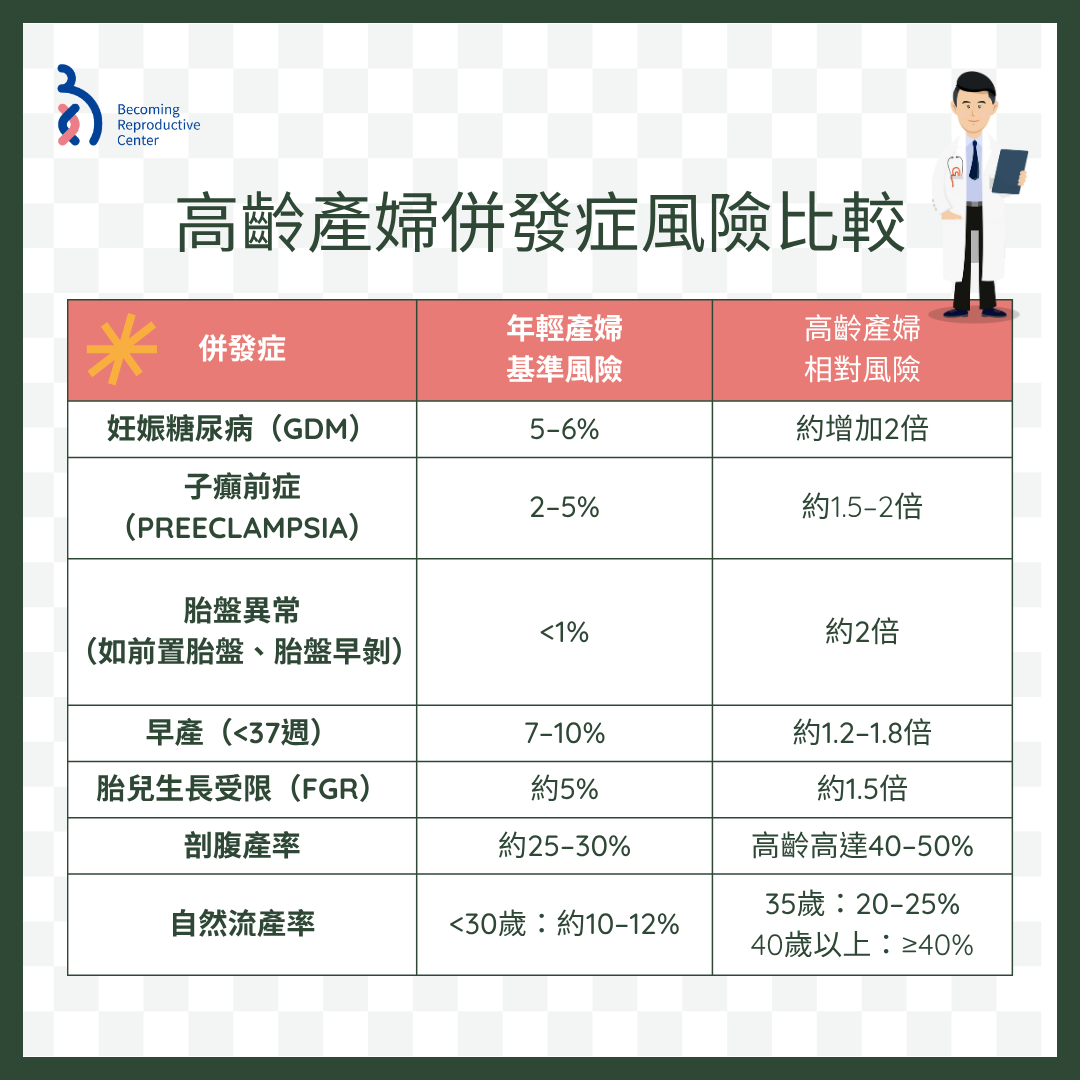
Comparison of Complication Risks in Advanced Maternal Age
🤰 Why do we specifically distinguish “advanced maternal age”?
In obstetrics and gynecology, “advanced maternal age” refers to women who are over 35 years old at the time of pregnancy.
You may wonder: Why is age 35 such an important cutoff?
In fact, this line is not based on superstition or age discrimination. It is a medically observed “risk threshold” based on statistical data.
- 1.
🔍 Why is advanced maternal age specifically noted?
- 2.
Increased risk of chromosomal abnormalities
As age increases, egg quality declines, and the risk of chromosomal abnormalities such as Down syndrome also rises.
For example:
Pregnancy at age 25: The risk of Down syndrome is about 1 in 1,250
Age 35: About 1 in 350
- 2.
Age 40: About 1 in 100
- 3.
Increased risk of pregnancy complications
Women of advanced maternal age are more likely to experience:
Gestational diabetes
Preeclampsia, or pregnancy-related hypertension
Placental abruption and abnormal fetal position
- 1.Lower chance of natural conception
As age increases, ovulation cycles may become less stable, and both egg quantity and quality decline. Natural conception becomes more difficult, leading more people to require IVF treatment.
- 1.Higher miscarriage rate
The natural miscarriage rate increases significantly in women over 35, partly due to chromosomal abnormalities.
🎯 This is not meant to scare you — it is a reminder.
Advanced maternal age does not mean you cannot give birth. It means you should be more cautious and plan earlier.
With advances in modern medicine, women of advanced maternal age can still have safe pregnancies and deliveries. However, closer prenatal care and risk management are needed.
BRCIVF wishes your dreams come true!