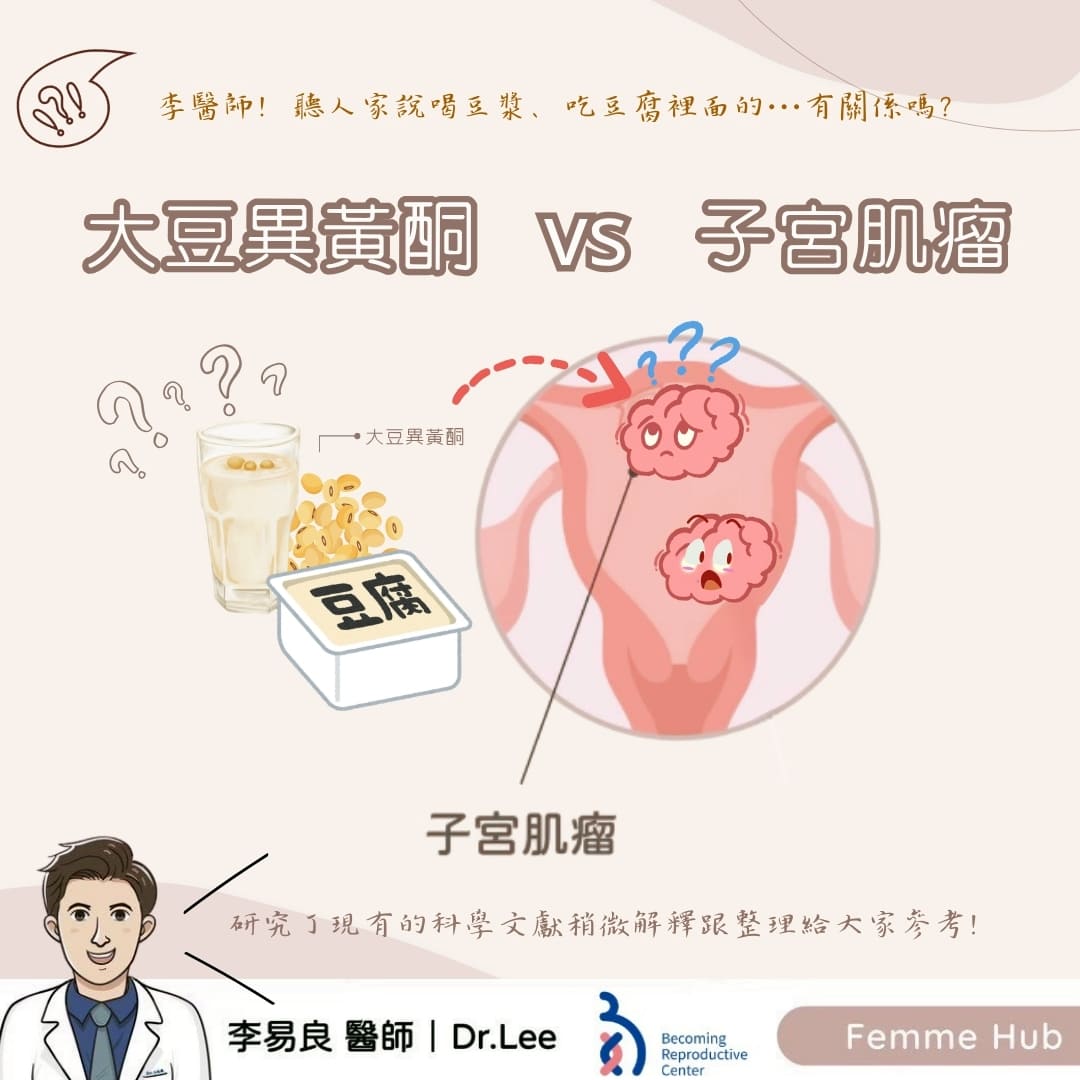
Soy Isoflavones and Uterine Fibroids: Do They Really Have an Effect? 🤔
👨🏻⚕️ In my clinic, many patients ask:
“Dr. Li, I usually love drinking soy milk and eating tofu. I heard that soy isoflavones are plant-based estrogens. Will they make my fibroids grow bigger?”
So Dr. Li reviewed the current scientific literature and整理ed a brief explanation for everyone.
1️⃣ What are soy isoflavones?
Soy isoflavones are a type of phytoestrogen. Their structure is similar to human 17β-estradiol, and they can bind to estrogen receptors, ER.
Interestingly, they have a higher affinity for ERβ than ERα.
• ERα activation → promotes cell proliferation
• ERβ activation → may instead induce cell apoptosis
Therefore, soy isoflavones act somewhat like selective estrogen receptor modulators, SERMs.
In different tissues and at different doses, they may show a “dual effect”: sometimes suppressing cell growth, but sometimes acting like an accelerator.
2️⃣ What is the relationship with uterine fibroids?
The development of uterine fibroids is related to an imbalance in estrogen receptor expression, with ERα increased and ERβ decreased.
This imbalance can cause smooth muscle cells to continue proliferating and undergoing fibrosis.
Studies have found that:
• Genistein and daidzein in soy isoflavones can activate ERβ, which theoretically may inhibit fibroid cell growth.
• However, exposure to high doses, or exposure during certain periods such as adolescence or infancy, may instead increase the risk of fibroids.
Soy isoflavones may also affect multiple signaling pathways, such as PI3K/AKT/mTOR, ERK1/2, and β-catenin. They may even influence DNA methylation, histone modification, and miRNA expression, further affecting cell proliferation and fibrosis.
3️⃣ What do clinical studies say?
📊 Current results are inconsistent:
• Some studies suggest that high soy isoflavone intake in adulthood may increase fibroid risk, especially in high-intake groups or in those fed soy-based formula during infancy.
• Other studies show no significant difference, or suggest that the association may be more obvious only in certain groups, such as African American women.
The key factors are dose, timing of intake, individual constitution, and metabolic differences.
Therefore, so far, the FDA and major medical societies have not issued clear recommendations regarding soy isoflavone intake and uterine fibroids.
4️⃣ What does Dr. Li think?
👉 Soy products themselves are healthy foods that contain high-quality protein and nutrients. There is no need to completely avoid them just because you are worried about fibroids.
👉 However, if you have multiple fibroids or fibroids that are growing rapidly, moderate intake is recommended, and long-term high-dose soy isoflavone supplements should be avoided.
👉 More importantly, regular ultrasound follow-up and clinic evaluation are more important than any single dietary factor.
The conclusion is…
Soy isoflavones are like a “double-edged sword 🗡️”:
• In some situations, they may suppress fibroid cells
• But at high doses or during certain exposure periods, they may promote fibroid development
Therefore, when facing uterine fibroids, instead of worrying too much about whether you can drink soy milk, it is better to focus on regular follow-up, personalized treatment, and a healthy lifestyle.
That is the most reliable direction.
Also remember: if you already have fibroids, regular follow-up is important. Do not let your “fibroid baby” grow too big, as it may reduce the treatment options available later.
BRCIVF wishes your dreams come true!