What Is an Ovarian Teratoma? Part 2
Ovarian Teratoma: Why Can Hair and Teeth Appear Inside a Tumor?
An ovarian teratoma is a type of tumor that originates from embryonic germ cells.
Because these cells have the ability to develop into different types of tissues, the tumor may contain various tissue components, such as skin, hair, teeth, fat or oily tissue, and cartilage.
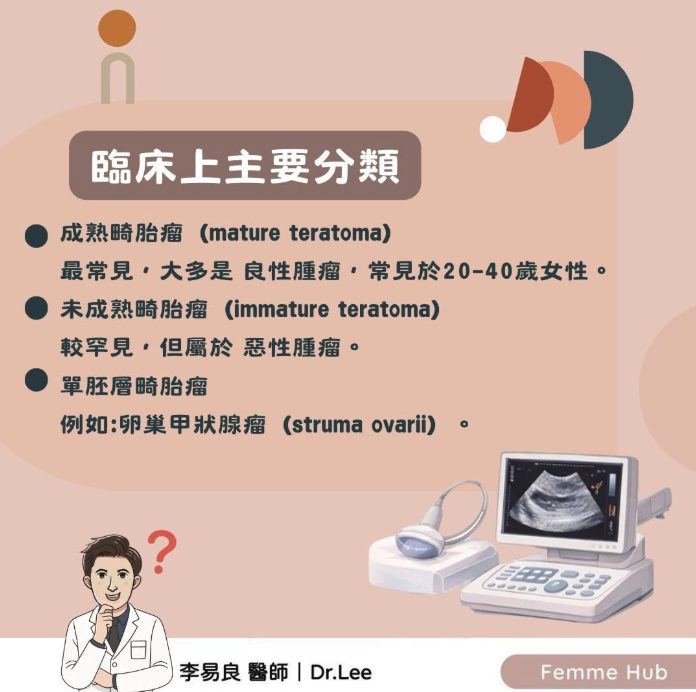
Clinically, ovarian teratomas are mainly divided into three types:
1️⃣ Mature teratoma
This is the most common type and is usually benign. It is often seen in women aged 20–40.
2️⃣ Immature teratoma
This type is relatively rare, but it is considered malignant.
3️⃣ Monodermal teratoma
One example is struma ovarii.
What are the common symptoms?
Many people have no symptoms at all. These tumors are often discovered during health checkups or ultrasound examinations.
If symptoms occur, they may include:
• Dull pain in the lower abdomen or pelvis
• Abdominal bloating
• A palpable abdominal mass
• Frequent urination or constipation due to tumor compression
However, the most important condition to watch for is ovarian torsion.
When the tumor causes the ovary to enlarge, especially when it is larger than about 6 cm, the ovary may twist, similar to twisting a towel. This can cut off blood flow and cause:
⚠️ Sudden severe abdominal pain
⚠️ Nausea and vomiting
⚠️ Pain so severe that standing becomes difficult
This situation usually requires emergency surgery.
Does every teratoma require surgery?
In general:
• Smaller than 5 cm and without symptoms
→ Regular follow-up may be considered
• Larger than 5–6 cm or with symptoms
→ Surgery is often recommended
The reason is simple:
The larger the tumor, the higher the risk of ovarian torsion.
The good news is that most mature teratomas are benign.
Nowadays, many cases can be treated through minimally invasive surgery or natural orifice surgery without visible wounds, allowing the tumor to be removed while preserving ovarian function.
A message from Dr. Yi-Liang Li:
Many young women become very nervous when they hear the words “ovarian tumor.”
In fact, ovarian teratoma is one of the most common and usually benign ovarian tumors.
What truly needs attention is the risk of ovarian torsion and the effort to preserve as much healthy ovarian tissue as possible during surgery.
If you experience:
• Sudden severe abdominal pain
• Persistent lower abdominal pain
• An ovarian tumor found during examination
It is recommended to seek evaluation from an obstetrician-gynecologist as early as possible.
In many cases, early management not only makes surgery simpler, but also makes it easier to preserve the ovary.