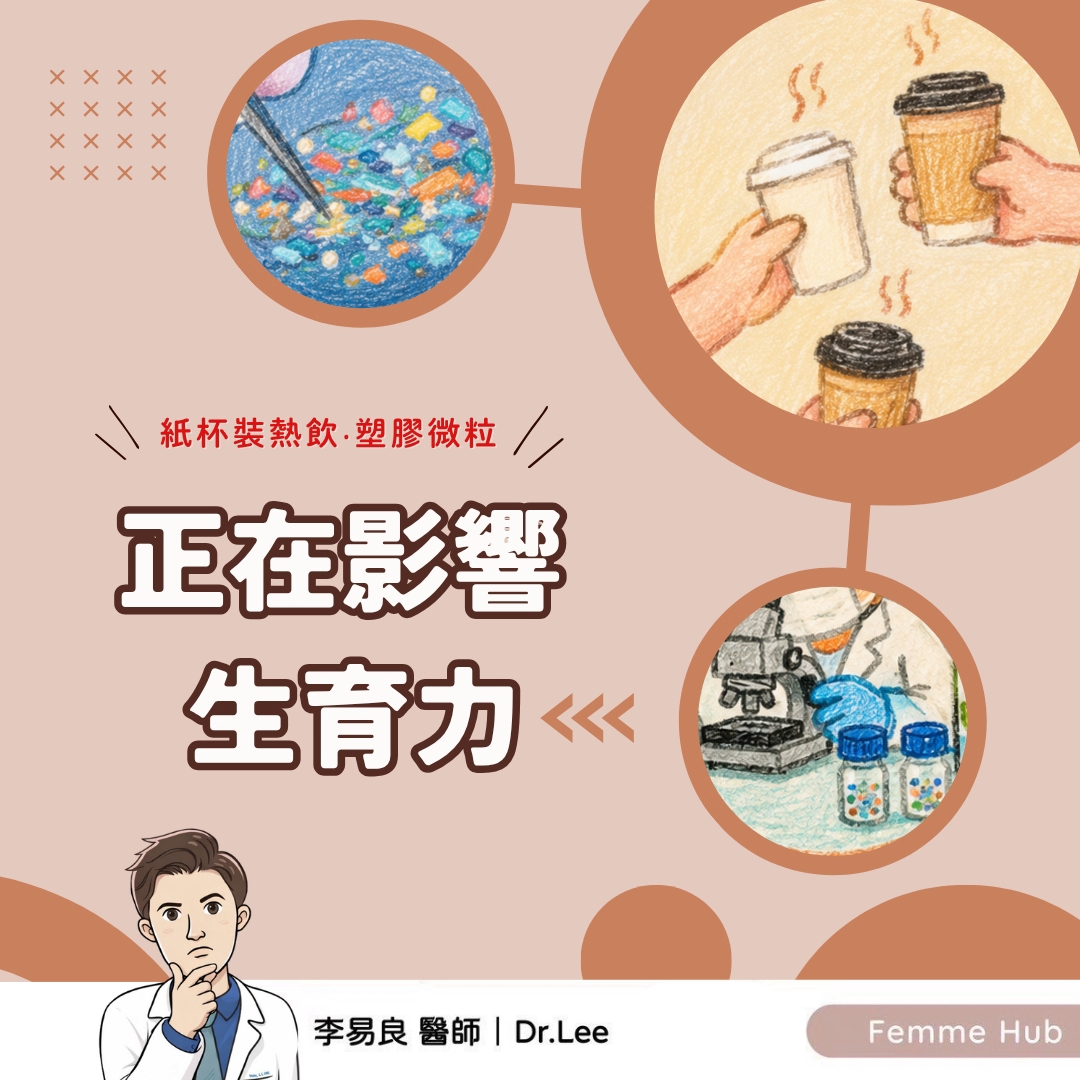
Dr. Li is often asked in clinic: "Can I drink coffee if I have a gynecological condition?"
But more than the coffee itself, a recent look at the literature turned up something more worth noticing — the very paper cup you drink your coffee from each day may be the real issue ☕️
A disposable paper cup isn't just "paper." Its inner layer is usually coated with plastic (PE) to make it waterproof and leak-proof. When a hot drink (close to 90°C) is poured in, that plastic layer can start releasing material. Studies have found that 100 mL of a hot drink can release tens of thousands of microplastic particles within 15 minutes — even nano-scale plastics.
More importantly, these microplastics don't only exist in the environment — they have already been detected in the human body, including in blood, the placenta, and uterine-related tissues.
And the effects aren't limited to women. Many ask, "Are men affected too?" The answer is yes. Microplastics have now been detected in human semen and testicular tissue.
Effects on male fertility include:
- ▪️Lower sperm concentration (about 5.99 million/ml)
- ▪️Motility down 14.6%
- ▪️Viability down 23.5%
- ▪️Abnormal-morphology rate up 10.6%
More alarming still, even low doses can have an effect.
Beyond worse sperm figures, microplastics may also affect male hormones and testicular structure:
- ▪️Lower testosterone
- ▪️Disruption of the reproductive endocrine (HPT) axis
- ▪️Seminiferous-tubule atrophy
- ▪️Loss of germ cells
- ▪️Increased chronic inflammation
So while everyone debates "can I drink coffee," the real question to watch may be: "What is that hot coffee served in?"
It's hard to avoid plastic entirely, but you can start with a few small things:
- ▪️Bring your own stainless-steel or glass cup
- ▪️Avoid holding hot drinks in disposable cups for long periods
- ▪️Avoid high-temperature contact with disposable plastic containers
Sometimes, what affects our health isn't the most obvious thing.
BRC ㊗️ wishes you a healthy pregnancy!